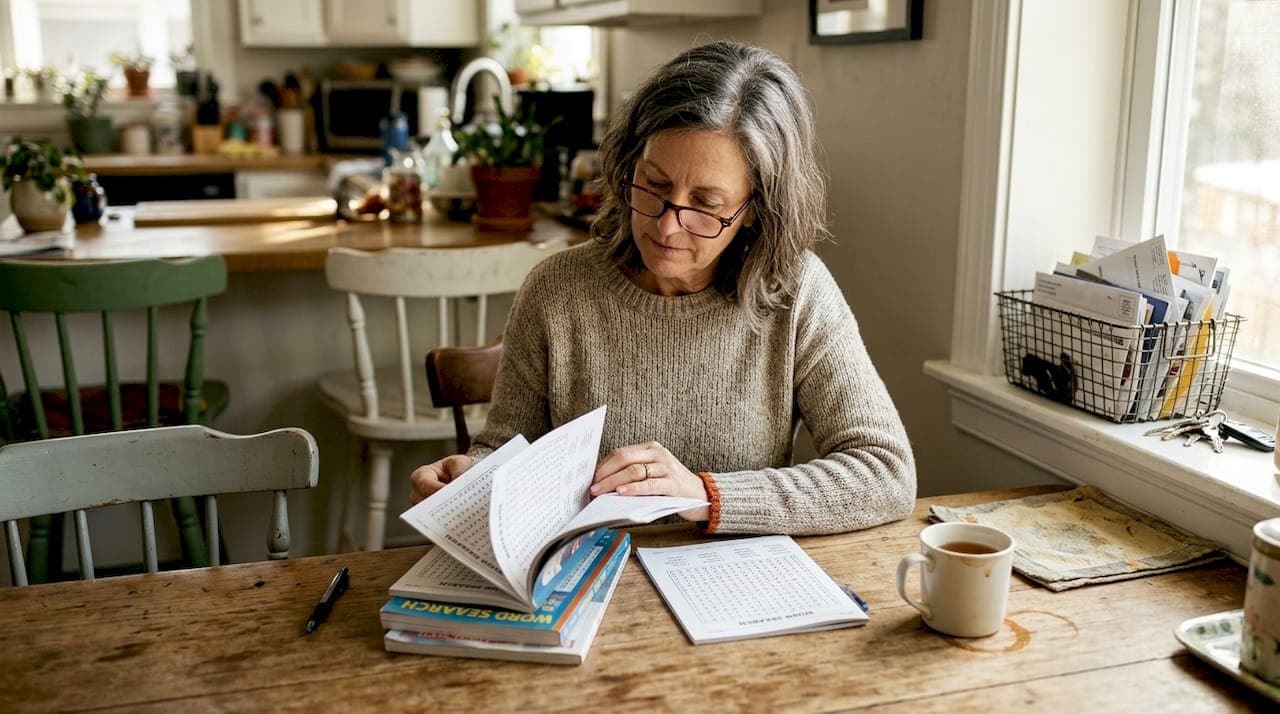
Finding a word search book that actually feels good to use is harder than it sounds. Too many books have tiny print that strains your eyes, grids that feel cramped, or themes so generic they lose your interest after one puzzle. Whether you are shopping for yourself, an aging parent, or a curious child, the right book can turn a quiet afternoon into something genuinely refreshing. This guide walks you through every key factor, from font size and paper quality to themes and skill levels, so you can stop guessing and start solving.
Table of Contents
- Understand your needs and preferences
- Evaluate print quality and accessibility features
- Pick the right themes and skill levels
- Compare popular options and avoid common mistakes
- Why personal experience matters when choosing word search books
- Find your next engaging word search book with RCJ
- Frequently asked questions
Key Takeaways
| Point | Details |
|---|---|
| Check large print sizes | Books with at least 18pt font provide better comfort and accessibility for adults and seniors. |
| Choose engaging themes | Theme selection makes word searches more enjoyable and supports mental exercise. |
| Assess print quality | High-contrast grids and thick paper prevent eye strain and enable a longer-lasting experience. |
| Balance challenge and fun | Select books with the right skill level for relaxation or educational goals. |
Understand your needs and preferences
Before you buy anything, take a moment to think about who will actually be using the book and what they need most. This step alone saves a lot of frustration. A book that works beautifully for a sharp-eyed 30-year-old might feel completely unusable for someone in their 70s with mild vision changes.
Visual comfort comes first. Font size and grid layout are the two biggest factors in whether a puzzle feels enjoyable or exhausting. For seniors and older adults, large print reduces eye strain significantly and makes longer solving sessions far more comfortable. Look for books that specifically advertise large print on the cover, and check the interior sample pages if you can.
Difficulty level shapes the experience. Some people want a relaxing, low-effort puzzle to unwind before bed. Others want a real mental workout. Most word search books fall into three general tiers:
- Easy: Short words, simple themes, smaller grids. Great for beginners and children.
- Moderate: Longer words, diagonal directions, slightly denser grids. A solid middle ground.
- Challenging: Reverse words, no word list provided, complex themes. Best for experienced solvers.
Choose based on what feels fun, not what sounds impressive.
Themes matter more than people expect. A book built around travel, nature, nostalgia, or animals tends to hold attention far longer than a generic vocabulary list. For children, educational themes like science, geography, or history can make the puzzles feel like a game rather than homework. Parents looking to support structured adult learning through play will find themed books especially useful for building vocabulary in a relaxed setting.
Here is a quick breakdown of common theme categories and who they suit best:
| Theme | Best for | Typical difficulty |
|---|---|---|
| Nature and animals | All ages, especially seniors | Easy to moderate |
| Nostalgia and history | Adults and seniors | Moderate |
| Educational topics | Children and students | Easy to moderate |
| Travel and geography | Adults | Moderate to challenging |
| Holidays and seasons | All ages | Easy |
Puzzle count and answer keys are practical details worth checking. A book with 100 or more puzzles gives you lasting value. Answer keys at the back are a must, especially for kids or anyone who wants to verify a completed grid without second-guessing themselves.
Evaluate print quality and accessibility features
Once you know what you want in terms of content, shift your attention to how the book is physically made. Print quality directly affects how long you can comfortably sit with a puzzle before your eyes or hands start to tire.
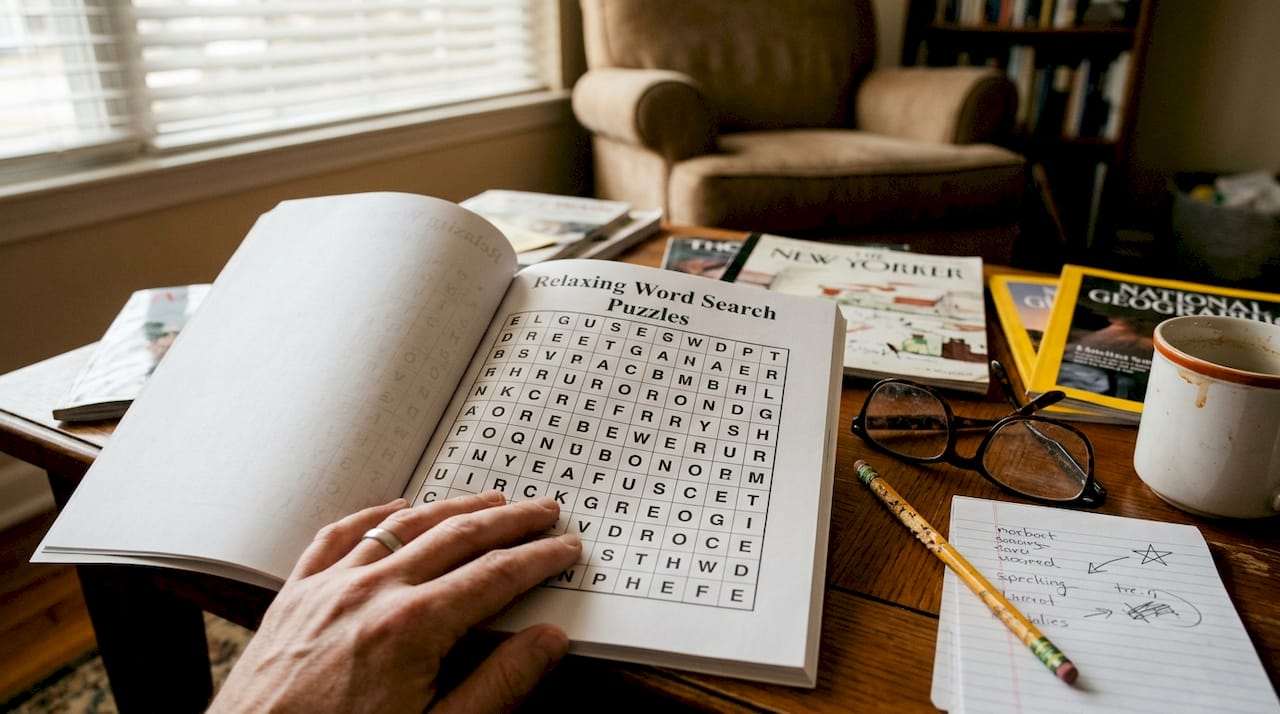
Font size is non-negotiable for comfort. The minimum acceptable size for adults is 16pt, but 18pt font with spacious grids and high contrast is the gold standard for seniors. Anything smaller than 16pt tends to cause fatigue quickly, especially under dim lighting. If the book does not list its font size, look for sample images online before purchasing.
Paper thickness matters. Thin paper allows ink to bleed through from the other side, making the grid hard to read. Look for books printed on at least 60lb paper stock. You should not be able to see the words from the next page showing through when you hold it up to light.
Here is a comparison of common format options:
| Feature | Paperback | Hardcover |
|---|---|---|
| Cost | Lower | Higher |
| Portability | Excellent | Moderate |
| Durability | Moderate | High |
| Lay-flat ease | Good | Varies |
| Best for | Everyday use, travel | Long-term shelf use |
Paperbacks are the most popular choice for word search books because they are lightweight and easy to hold for extended periods. Hardcovers last longer but can be awkward to hold open flat while solving.
Other accessibility features to look for:
- High contrast black text on white or cream paper
- Generous spacing between grid letters
- Clear, readable word lists printed near each puzzle
- Answer keys organized by page number at the back
- Binding that allows the book to lie flat without forcing it open
Pro Tip: Before buying online, search for the book's interior preview on the retailer's page. Most major platforms show a few sample pages. Check that the grid letters are crisp, evenly spaced, and easy to distinguish at a glance.
Pick the right themes and skill levels
Content engagement is what keeps you coming back to a puzzle book after the novelty wears off. A book with beautiful print but dull themes will sit on the shelf after the first week.
How to match themes to your interests:
- Write down three topics you genuinely enjoy, whether that is gardening, classic movies, cooking, or sports.
- Search specifically for word search books built around those topics.
- Check the table of contents or sample pages to confirm the theme runs throughout the book, not just on the cover.
- If buying for a child, ask them what subjects excite them most at school or at home.
- For seniors, nostalgic themes like music from past decades or classic television often spark the most enthusiasm.
Themes like nature or nostalgia support relaxation and focus by giving each puzzle a familiar, comforting context. When you recognize the words and care about the topic, solving feels rewarding rather than mechanical.
Skill level matching keeps frustration low. A puzzle that is too easy becomes boring fast. One that is too hard creates stress instead of calm. The sweet spot is a book that challenges you just enough to stay engaged without making you feel stuck.
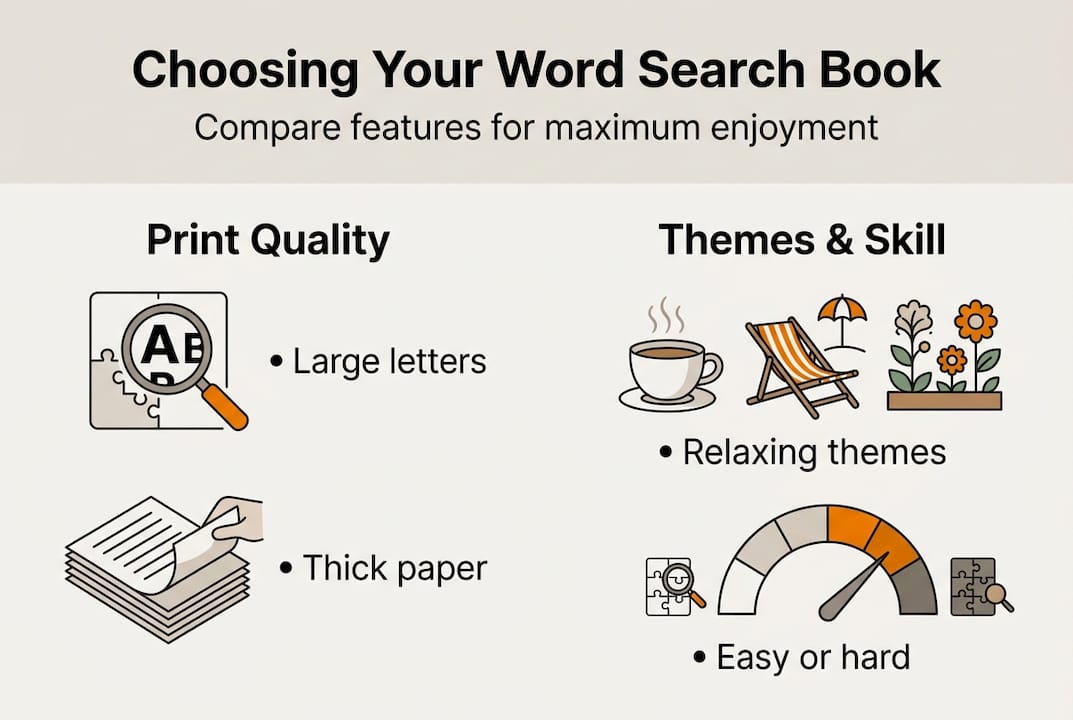
Some books mix difficulty levels across chapters, which is a smart design choice. You can warm up with easier puzzles and graduate to harder ones as your confidence grows.
The cognitive angle is real but realistic. Word puzzle research confirms that regular engagement with puzzles supports focus and mental sharpness. The key word is supports. Puzzles are a healthy mental habit, not a medical treatment. Choosing books that connect to lifelong education programs or learning goals adds even more value to the daily habit.
A good rule of thumb: if you finish a puzzle and feel satisfied rather than bored or defeated, the difficulty level is right for you.
Compare popular options and avoid common mistakes
With your preferences and feature checklist in hand, it is time to look at actual books and brands. A few names consistently earn strong reviews for quality and accessibility.
Trusted brands worth considering:
| Brand | Known for | Best audience |
|---|---|---|
| RCJ Puzzle Books | Large print, themed collections | Adults, seniors, kids |
| Penny Dell | Classic style, high volume | Adults |
| Kappa | Affordable, widely available | General audience |
RCJ Puzzle Books stands out for its focus on large print and engaging themes designed specifically for comfort and long-term enjoyment across all ages.
Common mistakes buyers make:
- Skipping the print size check and ordering a standard print book by accident
- Ignoring theme relevance and buying whatever is on sale
- Overlooking grid spacing, which can make even large fonts hard to use
- Forgetting to check puzzle count and ending up with a book that runs out too quickly
- Not reading user reviews, which often reveal real usability issues the product description misses
Pro Tip: Look for books with verified user ratings and interior preview images. A product with 500 positive reviews from actual seniors or parents carries far more weight than polished marketing copy.
"Consistent quality advice focuses on print size, themes, and answer keys. Word puzzle research affirms real cognitive benefits while keeping expectations grounded and realistic."
Always double-check grid spacing in the sample pages. Some books advertise large print for the word list but keep the actual grid letters small, which defeats the purpose entirely.
Why personal experience matters when choosing word search books
Here is something most buying guides will not tell you: no expert review or star rating replaces what you or your family member actually feels when holding the book and working through the first puzzle. Print quality looks different on a screen than it does in your hands. A theme that sounds appealing in a product title might feel flat once you see the actual word lists.
At RCJ Puzzle Books, we have heard from readers who tried three or four books before finding one that genuinely clicked. The feedback we value most comes from people who describe how a book felt to use, not just whether it looked good in a photo.
Studies confirm that word searches support relaxation and focus, but the real benefit only shows up when you actually enjoy sitting down with the book. A puzzle you dread picking up does nothing for your mental health.
Trust your gut. If the sample pages feel right and the theme genuinely interests you, that is a stronger signal than any marketing claim. RCJ personal feedback from real readers is one of the most honest resources we offer, and we encourage you to use it.
Find your next engaging word search book with RCJ
Now that you know exactly what to look for, the next step is finding a book that checks all your boxes without the guesswork.
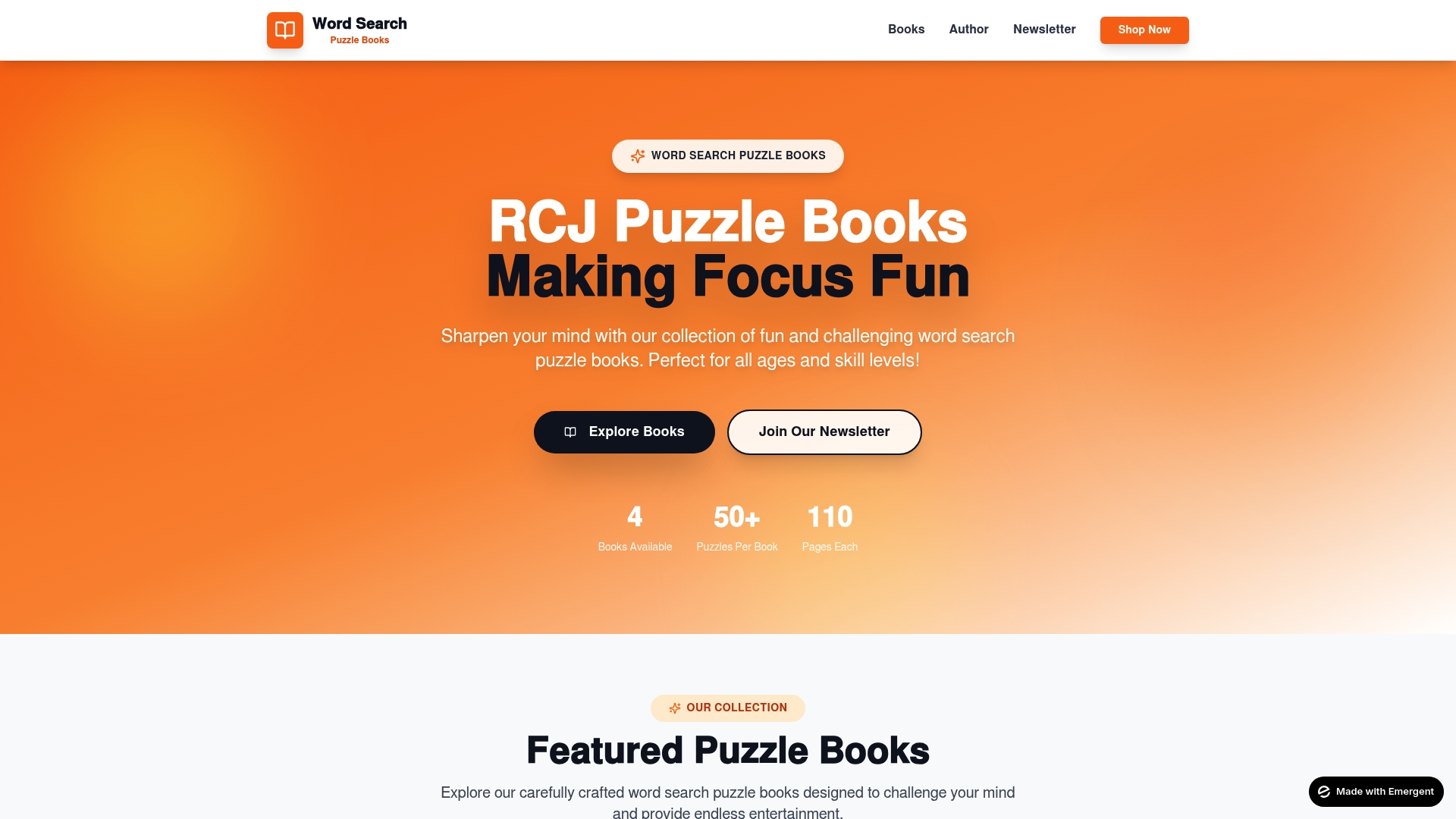
RCJ Puzzle Books offers a growing collection of large-print, themed word search books designed for adults, seniors, and children. Every book features high-contrast printing, spacious grids, and engaging themes chosen to keep solvers coming back puzzle after puzzle. You can browse the full collection, read real user reviews, and preview sample pages to find your perfect match. Whether you want something calming for a quiet evening or something educational for a child, RCJ has a book built for that exact moment.
Frequently asked questions
What font size is best for senior-friendly word search books?
18pt font is the recommended minimum for seniors, as it provides comfortable readability without straining the eyes during longer solving sessions.
Do themed word search books help with relaxation or focus?
Yes, themes like nature or nostalgia create a familiar, engaging context that makes puzzles more relaxing and helps sustain focus throughout a session.
Can word search books prevent dementia or cognitive decline?
Word puzzle research shows that puzzles support mental sharpness and focus, but current evidence does not support claims that they prevent dementia.
What features should parents look for in children's word search books?
Look for age-appropriate themes and difficulty, along with clear answer keys and engaging layouts that make learning feel like play rather than a chore.